Head and Shoulders Patterns: Detection and Trading Strategy
The Head and Shoulders Pattern Explained
The head and shoulders is one of the most widely studied reversal patterns in technical analysis, and for good reason. When it forms correctly, it provides a clear signal that a trend is ending and a new trend in the opposite direction is beginning. The pattern earns its name from its visual resemblance to a person's head flanked by two shoulders.
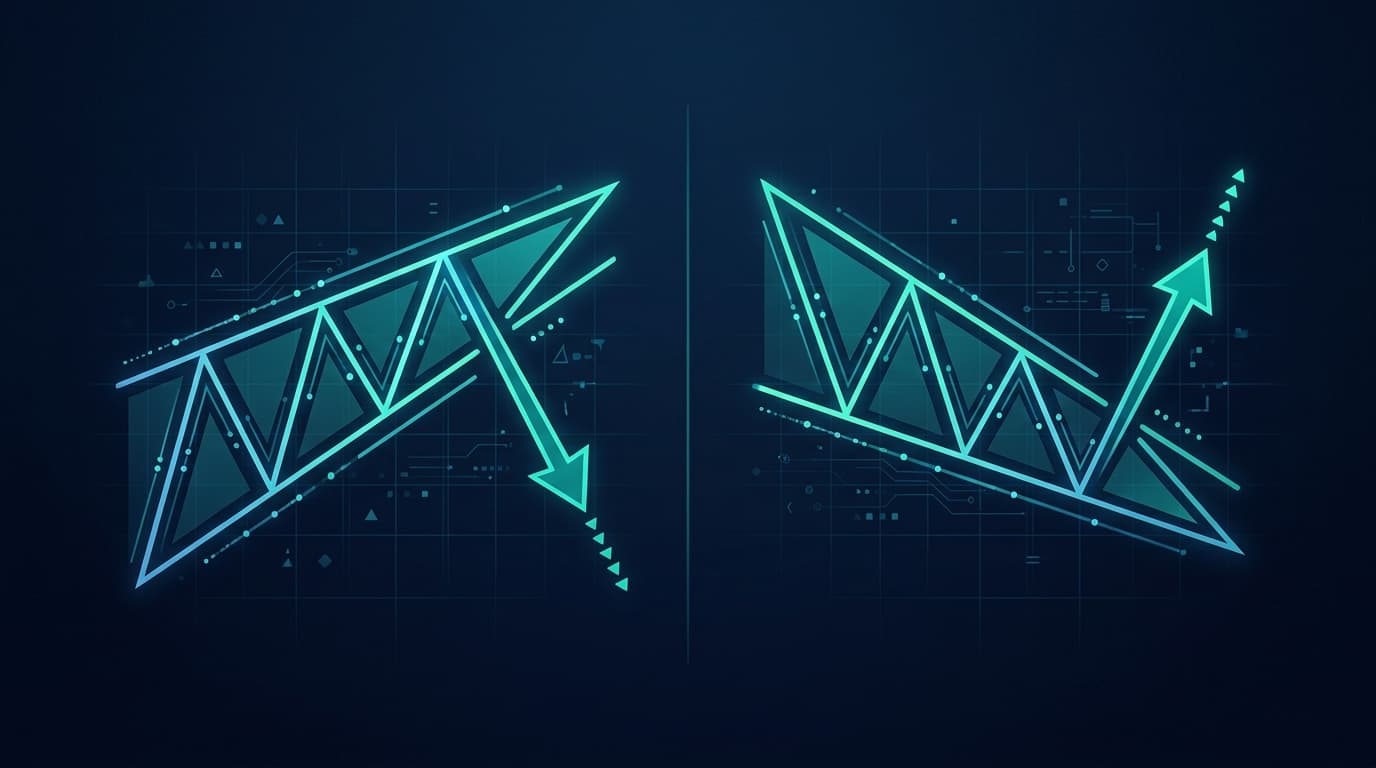
The standard head and shoulders pattern is bearish. It appears at the top of an uptrend and signals that the rally is exhausting and a decline is coming. The inverse (or inverted) head and shoulders is its mirror image: it forms at the bottom of a downtrend and signals that selling pressure is drying up and a rally is ahead.
Both versions of the pattern share identical structure and trading logic. Once you understand the standard version, applying the same principles in reverse gives you the inverse version. The pattern is considered one of the most reliable reversal signals when confirmed by volume and a clean neckline break.
Identifying the Components
A head and shoulders pattern has four distinct components that must all be present for the pattern to be valid.
Left shoulder: The price rallies to a new high on strong volume, then pulls back to a support level. This looks like a normal trend continuation at the time. Traders see a new high and expect the uptrend to continue.
Head: The price rallies again, this time exceeding the left shoulder's peak to make an even higher high. Then it declines back to approximately the same support level where the left shoulder's pullback ended. The head is the highest point of the entire formation. At this stage, the uptrend still appears healthy because the stock has made another new high.
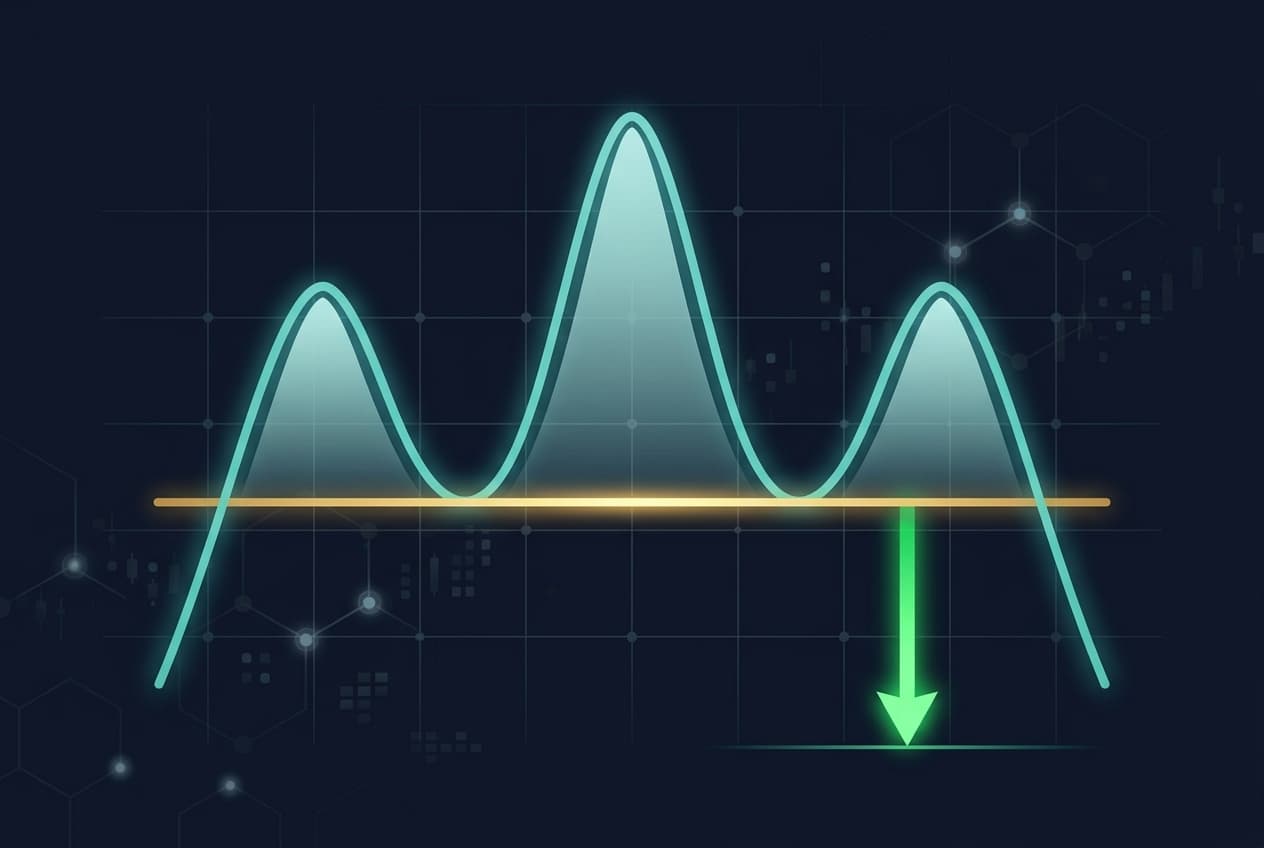
Right shoulder: The price rallies a third time, but this rally fails to reach the height of the head. This lower high is the first clear warning sign that buying momentum is weakening. The price then declines again toward the support level.
Neckline: The neckline is the support line that connects the two pullback lows (the trough between the left shoulder and head, and the trough between the head and right shoulder). This line can be horizontal, upward-sloping, or downward-sloping. A downward-sloping neckline is generally more bearish because it shows that each pullback is reaching lower support levels, indicating deteriorating demand. The neckline is the most important level in the pattern because the pattern is not confirmed until the price breaks below it.
Volume Pattern During Formation
Volume behavior during the pattern's development provides critical confirmation clues. The classic volume profile follows a specific progression.
Left shoulder rally: Volume is typically strong on this move, consistent with a healthy uptrend. This is what a normal trending market looks like, and there is nothing unusual at this stage.
Head rally: Volume on the head's rally is often equal to or slightly lower than the left shoulder's rally volume. This is the first subtle warning sign. In a healthy uptrend, new highs should be accompanied by increasing volume. When the highest high in the pattern (the head) occurs on similar or declining volume, it suggests that buying enthusiasm is waning even as the price reaches new territory.
Right shoulder rally: Volume on the right shoulder's rally is noticeably lower than on both the head and left shoulder rallies. This declining volume progression (left shoulder > head > right shoulder) is the textbook confirmation that each successive buying wave has less participation and conviction. The right shoulder's low volume is a strong signal that the uptrend has lost its fuel.
Neckline break: When the price finally breaks below the neckline, volume should expand significantly. This volume surge confirms that sellers are now in control and that the breakdown is genuine. High volume on the break reduces the likelihood of a false breakdown and whipsaw.
Important caveat: If the right shoulder rally shows higher volume than the head rally, be cautious. This breaks the expected pattern of declining volume and may indicate that the head and shoulders formation is failing to complete. Higher volume on the right shoulder could mean buyers are stepping in aggressively, which may push the price past the head's peak and invalidate the pattern entirely.
Neckline Break: The Confirmation Signal
The single most important rule when trading head and shoulders patterns is this: the pattern is not confirmed until the price breaks below the neckline. Until that moment, the pattern could fail and the uptrend could resume.
Wait for the close: An intraday pierce below the neckline is not sufficient confirmation. The price must close below the neckline to provide a meaningful signal. Intraday wicks below the neckline that close back above it are often traps that catch premature short sellers.
Volume on the break: The breakdown candle should show above-average volume. A neckline break on thin volume is suspicious and more likely to reverse. Compare the breakdown volume to the 20-day average to assess whether the move has conviction.
Role reversal after the break: Once the price breaks below the neckline, this former support level often becomes resistance. If the price bounces back to the neckline after the breakdown, this retest provides a second entry opportunity with a tighter stop (just above the neckline). Not every breakdown produces a clean retest, but when one occurs, it is often a high-probability trade.
How to Calculate the Price Target
The head and shoulders pattern provides a built-in measured move target that gives you a minimum price objective for the expected decline.
Step 1: Measure the vertical distance from the head's peak to the neckline. For example, if the head peaks at $60 and the neckline is at $52, the distance is $8.
Step 2: Project that distance downward from the point where the price breaks the neckline. If the breakdown occurs at $52, the target is $52 - $8 = $44.
This measured move target represents a minimum expected decline. In strong bear markets or when the breakdown occurs on very high volume, the actual move may significantly exceed this target. Some traders use 1.5x or 2x the measured move as secondary targets for scaling out of positions.
For the inverse head and shoulders, the same calculation applies in the opposite direction. Measure the distance from the head's low to the neckline and project upward from the breakout point.
Entry Strategies
There are three main approaches to entering a head and shoulders trade, each offering a different balance of confirmation and reward.
Neckline break entry: This is the standard, most conservative approach. Enter short (or sell your long position) when the price closes below the neckline on above-average volume. The advantage is that the pattern is fully confirmed. The disadvantage is that you are entering after the price has already declined from the right shoulder to the neckline, so your entry price is lower than what an earlier entry would provide.
Retest entry: Wait for the neckline break, then wait for the price to bounce back to the neckline and fail there (resistance confirmation). Enter short on this failed retest. This approach offers the best risk-to-reward ratio because your stop-loss is tight (just above the neckline) and your target is the full measured move. The disadvantage is that not every breakdown produces a retest, so you may miss the trade entirely.
Aggressive right shoulder entry: Enter short during the right shoulder's rally when volume is declining and the rally stalls below the head's peak. This offers the best entry price but the highest risk, since the pattern is not yet confirmed. If the right shoulder rally continues past the head's peak, the pattern is invalidated and you take a loss.
Stop-Loss Placement
Proper stop placement depends on your entry method.
For neckline break entries: Place your stop above the right shoulder's peak. This is the safest option. If the price reclaims the right shoulder level, the pattern has clearly failed. A tighter alternative is to place the stop just above the neckline with a small buffer, but this risks being shaken out on a normal retest bounce.
For retest entries: Place your stop just above the neckline (since you entered on the retest, this stop is very tight). If the neckline fails to hold as resistance, exit immediately.
For aggressive right shoulder entries: Place your stop above the head's peak. If the price exceeds the head, the entire formation is invalid.
Regardless of the entry method, factor the stop-loss distance into your position sizing calculation to ensure your dollar risk per trade stays within your tolerance (typically 1% to 2% of account value).

Inverse Head and Shoulders
The inverse head and shoulders is the exact mirror image of the standard pattern, and it is considered one of the most reliable bullish reversal formations.
Structure: It forms at the bottom of a downtrend. The left shoulder is a decline to a new low followed by a bounce. The head is a deeper decline that exceeds the left shoulder's low, followed by a rally. The right shoulder is a decline that does not reach the head's low (a higher low), followed by a rally toward the neckline.
Neckline: In the inverse version, the neckline connects the two rally peaks (between left shoulder and head, and between head and right shoulder). This neckline acts as resistance that must be broken to confirm the bullish reversal.
Volume: The ideal volume pattern is the same: declining volume on each successive low (left shoulder > head > right shoulder in terms of selling volume), followed by a surge in volume on the neckline breakout.
Target: Measure the distance from the head's low to the neckline and project that distance upward from the breakout point. This gives the minimum expected rally.
Confirmation: The pattern is confirmed when price closes above the neckline on above-average volume. After the breakout, the neckline often acts as new support on any pullback.
Common Mistakes
Several errors frequently undermine traders who attempt to trade head and shoulders patterns.
Premature entries before the neckline break: Selling before the pattern is confirmed means you are betting on an incomplete formation. Many potential head and shoulders patterns never complete. The right shoulder rally may surge past the head, invalidating the pattern and trapping early shorts.
Ignoring volume: The declining volume progression from left shoulder to right shoulder is a critical component. Without it, the visual shape alone is unreliable. If the right shoulder shows expanding volume, the pattern may be failing.
Expecting exact symmetry: Textbook diagrams show perfect, symmetric patterns. Real markets rarely produce them. The right shoulder is often shorter or taller than the left, forms over a different timeframe, and may not retrace to the exact same price levels. Flexibility is required when identifying these patterns on real charts.
Using the pattern on very short timeframes: On 1-minute or 5-minute charts, head and shoulders formations are heavily influenced by market noise and have significantly lower reliability. The pattern works best on daily, weekly, and 4-hour charts where each candle represents meaningful price action.
Forgetting the broader context: A head and shoulders pattern that forms during a powerful bull market may fail because the broader trend overwhelms the local pattern. Always consider whether the higher timeframe trend supports or contradicts the signal.
How PatternPilotAI Detects Head and Shoulders
PatternPilotAI uses geometric analysis to identify the three-peak (or three-trough) structure and draw the neckline across the intervening troughs (or peaks).
Asymmetry detection: Unlike rigid rule-based screeners, the AI can detect patterns where the shoulders are not perfectly symmetric. It evaluates the overall structure rather than requiring exact proportions, which catches valid patterns that simpler tools would miss.
Volume profile scoring: The AI analyzes volume behavior across the pattern to determine whether the declining volume progression is present. Patterns with textbook volume behavior receive higher confidence scores.
Neckline slope analysis: The AI calculates the neckline's slope and incorporates it into the confidence score. A downward-sloping neckline in a standard H&S (or upward-sloping in an inverse H&S) increases the pattern's bearish (or bullish) significance.
Upload a chart and let the AI identify head and shoulders patterns that might take hours to spot manually. Sign up for free to get started.
Ready to analyze your charts?
Try PatternPilotAI free. Upload any chart and get an AI-powered trade plan in seconds.
Get Started Free