Double Tops and Double Bottoms: A Pattern Guide

What Double Top and Double Bottom Patterns Signal
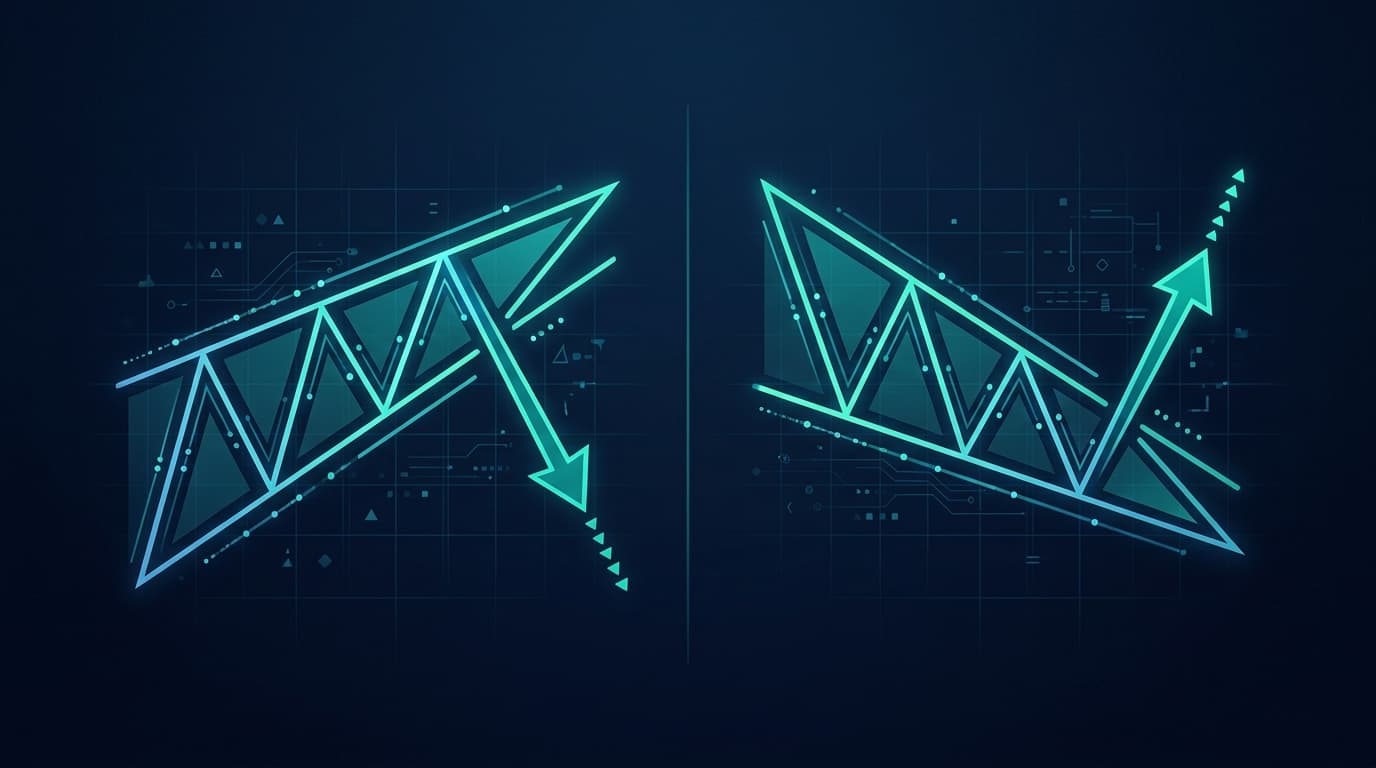
Double tops and double bottoms are among the most widely recognized reversal patterns in technical analysis. A double top signals a potential reversal from an uptrend to a downtrend. A double bottom signals a potential reversal from a downtrend to an uptrend. Together, they form the foundation of reversal trading for many technical analysts.
These patterns work because they reflect a change in the balance of power between buyers and sellers. When price reaches a level twice and fails to break through, it tells you that the opposing side (sellers at resistance, buyers at support) is strong enough to halt the trend. That failed second attempt often triggers a reversal as traders on the wrong side exit their positions.
Understanding how these patterns form, how to confirm them, and how to trade them gives you a reliable framework for identifying trend reversals before they fully develop.
Double Top Formation Anatomy
A double top is a bearish reversal pattern that forms after an uptrend. It consists of two peaks at approximately the same price level, separated by a pullback to a support level known as the neckline.
First peak: Price advances within an existing uptrend and reaches a new high. Sellers step in at this level, and the price pulls back. At this point, nothing unusual has happened. Pullbacks within uptrends are normal.
The pullback (neckline formation): Price declines from the first peak to a support level where buyers step in again. This low point between the two peaks becomes the neckline. The neckline is the critical level that will later determine whether the pattern is confirmed.
Second peak: Price rallies again and approaches the level of the first peak. This is where the pattern's significance emerges. If buyers were truly in control, price would push through the prior high and continue the uptrend. Instead, the price stalls at or near the same level and begins to reverse again. This failure to make a higher high is the first warning sign that the uptrend is losing momentum.
Volume on the second peak: Volume is typically lower on the second peak than the first. This declining volume tells you that buying interest is fading. Fewer participants are willing to buy at these elevated prices. This volume divergence is one of the strongest confirmation signals within the pattern.
The decline from the second peak: After failing at the prior high, price drops back toward the neckline. If it breaks below the neckline on increased volume, the double top is confirmed and a reversal is underway.
Double Bottom Formation Anatomy
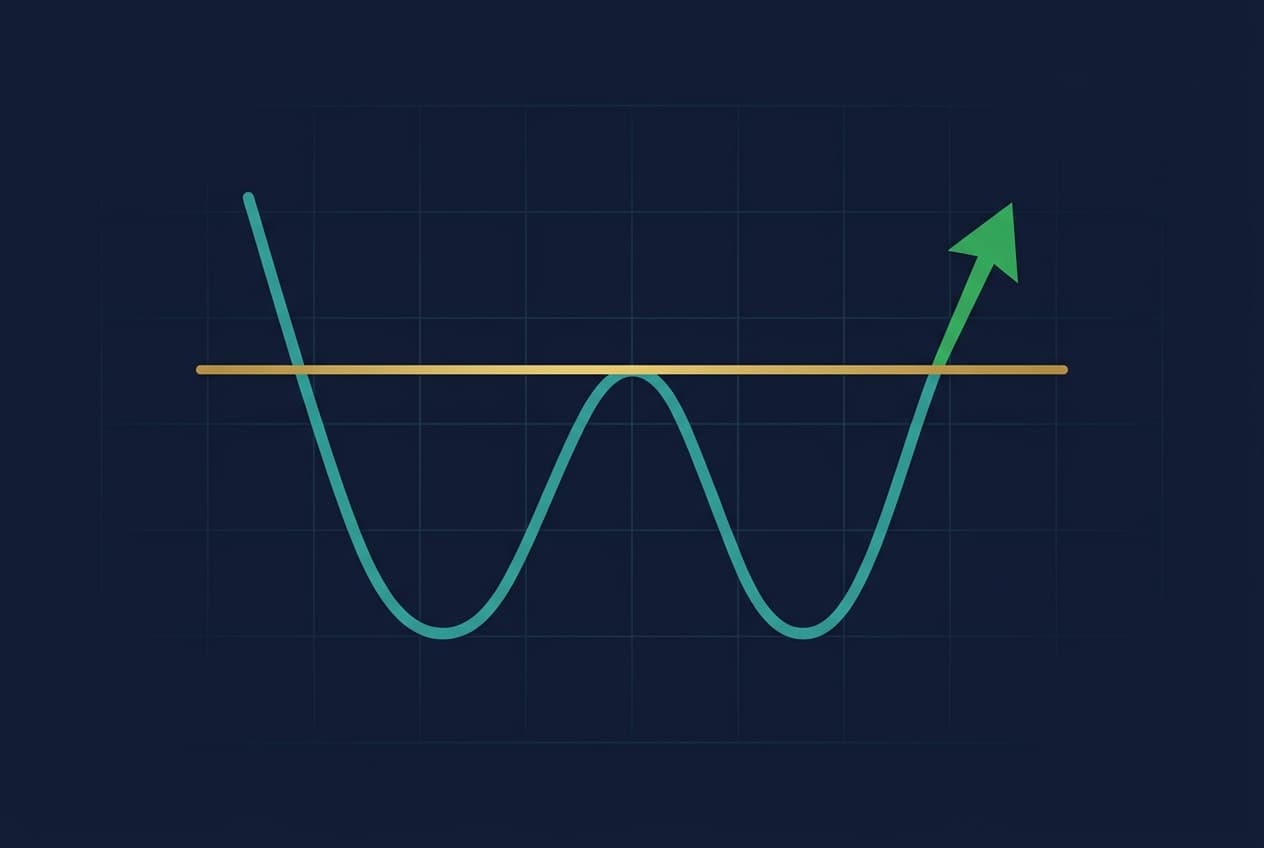
A double bottom is the bullish mirror image of a double top. It forms after a downtrend and consists of two troughs at approximately the same price level.
First trough: Price declines within a downtrend and reaches a low where buyers step in. The price bounces. This is a normal occurrence in a downtrend, and there is no indication yet that a reversal is forming.
The bounce (neckline formation): Price rallies from the first low to a resistance level where sellers push it back down. This high point between the two troughs becomes the neckline.
Second trough: Price declines again and approaches the level of the first trough. If sellers were truly in control, price would push to a new low and continue the downtrend. Instead, price holds at or near the same level and bounces again. This failure to make a lower low is the first signal that selling pressure is exhausting.
Volume on the second trough: Volume is typically lower on the second decline than the first. This means fewer sellers are willing to dump at these depressed prices. The selling pressure is drying up. When the price bounces from the second trough, volume often increases, confirming that buyers are stepping in with conviction.
The rally from the second trough: Price rises toward the neckline. If it breaks above the neckline on increased volume, the double bottom is confirmed and a reversal to the upside is underway.

The Neckline and Its Significance
The neckline is the single most important level in both double top and double bottom patterns. It is the line that separates a "possible reversal" from a "confirmed reversal."
For double tops: The neckline is drawn at the low point between the two peaks. Price must break below this level for the pattern to be confirmed. Until the neckline breaks, the double top is merely a consolidation near highs, not a confirmed reversal.
For double bottoms: The neckline is drawn at the high point between the two troughs. Price must break above this level for the pattern to be confirmed. Until the neckline breaks, the double bottom could simply be a range within an ongoing downtrend.
Horizontal vs. slanted necklines: Ideally, the neckline is roughly horizontal. However, some valid patterns have slightly slanted necklines. A double top with a rising neckline (the pullback between peaks formed a higher low) is actually less bearish because the rising neckline suggests some residual buying strength. A double bottom with a falling neckline is less bullish for the same reason.
The neckline as future support or resistance: After a double top breaks below the neckline, that former neckline support often becomes resistance. Price may rally back to test the neckline from below before continuing lower. This retest provides a second entry opportunity with a tighter stop. The same applies in reverse for double bottoms: the broken neckline resistance becomes support, and a pullback to this level offers a retest entry.
Measuring the Expected Move
Double tops and double bottoms provide a built-in method for calculating a minimum price target after confirmation.
The measured move calculation: Measure the distance from the peak (or trough) to the neckline. Then project that same distance from the neckline in the direction of the breakout.
Double top example: A stock forms a double top with peaks at $80 and a neckline at $72. The distance from peak to neckline is $8. When the neckline breaks, the minimum target is $72 - $8 = $64.
Double bottom example: A stock forms a double bottom with troughs at $40 and a neckline at $48. The distance from trough to neckline is $8. When the neckline breaks upward, the minimum target is $48 + $8 = $56.
This measured move target is a minimum expectation. In strong reversals, the actual move may exceed the target by a significant margin. Many traders use the measured move as a first target (where they take partial profits) and then trail a stop on the remaining position to capture any additional movement.
Entry Strategies and Stop-Loss Placement
There are several ways to enter a double top or double bottom trade, each with different risk and reward profiles.
Aggressive entry (anticipation): Enter on the second peak (or second trough) as price begins to reverse, before the neckline breaks. This gives the tightest stop-loss and the best risk-to-reward ratio, but the pattern is not yet confirmed. The risk of a false signal is highest with this approach.
Standard entry (neckline break): Enter when price breaks through the neckline on above-average volume. This is the most common entry method because the pattern is confirmed. The stop-loss is placed above the second peak (for double tops) or below the second trough (for double bottoms).
Conservative entry (neckline retest): Wait for price to break the neckline, then pull back to retest it from the other side. Enter on the successful retest. This provides the strongest confirmation and often a tight stop, but not every neckline break produces a clean retest. You may miss some trades entirely.
Stop-loss placement:
- For double top shorts: Stop above the higher of the two peaks, with a small buffer above it.
- For double bottom longs: Stop below the lower of the two troughs, with a small buffer below it.
- For retest entries: Stop on the other side of the neckline, since a failure to hold the retest invalidates the trade.
Triple Tops and Bottoms: When Doubles Extend
Sometimes price tests a level three times before reversing, creating a triple top or triple bottom. These patterns follow the same logic as their double counterparts but provide even stronger reversal signals.
Why triples are stronger: Each failed attempt to break through a level represents another rejection. Three failures are more significant than two because they demonstrate persistent resistance (or support) that has withstood multiple attacks. The trapped traders on the wrong side accumulate with each failed attempt, creating more forced selling (or buying) when the pattern finally breaks.
Trading triple patterns: The entry, stop-loss, and target calculations are identical to double tops and bottoms. Use the neckline for confirmation, measure the distance from the peaks (or troughs) to the neckline, and project the target. The main difference is that triple patterns take longer to develop, so you need patience.
When a double becomes a triple: If you entered a double top short and price rallies back toward the peaks for a third test, do not panic. As long as price does not exceed the prior peaks by a significant margin (breaking your stop), the pattern is still valid. The third test simply adds another layer of resistance and makes the eventual breakdown more powerful.
Common Mistakes With Double Patterns
Even experienced traders make errors when trading these patterns. Here are the most frequent:
Calling the pattern before the neckline breaks: Two peaks at the same level is not automatically a double top. Until the neckline breaks, the pattern is unconfirmed and may resolve differently. Price could consolidate near the highs and eventually break out to new highs. Wait for confirmation.
Ignoring volume: A double top where the second peak has higher volume than the first is less reliable because it suggests strong buying interest still exists. Similarly, a double bottom where the second trough has higher selling volume is less reliable. Volume should decline on the second peak or trough.
Exact level obsession: The two peaks (or troughs) do not need to be at the exact same price. A difference of 1% to 3% is common and acceptable. What matters is that the price reached the same general area twice and failed to break through. Do not discard a valid pattern because the second peak was $0.50 lower than the first.
Ignoring the broader trend: A double top in a raging bull market may fail because the underlying trend is too strong. Similarly, a double bottom in a severe bear market may be overwhelmed by continued selling pressure. Consider the context. Double tops are most reliable near the end of extended uptrends, and double bottoms are most reliable after prolonged downtrends.
Poor risk management: Trading the pattern without a stop-loss, or using a stop that is too tight (inside the pattern) or too wide (giving back too much profit if wrong). Your stop should be logically placed beyond the peaks or troughs, and your position should be sized so that a stop-out represents an acceptable loss.
How AI Detects Double Patterns
Manually scanning charts for double tops and bottoms requires checking hundreds of charts across multiple timeframes. AI accelerates this process by identifying the geometric structure, volume profile, and neckline levels that define these reversal patterns.
PatternPilotAI analyzes uploaded charts for the two-peak or two-trough structure, measures the symmetry between the peaks or troughs, evaluates volume behavior on each attempt, and identifies the neckline. The analysis includes a confidence score that reflects how closely the pattern matches the ideal formation.
When a failed breakout at the second peak or trough is detected, the AI flags it as a high-probability reversal signal. The analysis provides entry levels, stop-loss placement, and measured move targets so you can evaluate the trade quickly.
Upload your chart to see if a double top or double bottom is forming. Sign up for free and get an instant pattern analysis with entry, stop, and target levels.
Ready to analyze your charts?
Try PatternPilotAI free. Upload any chart and get an AI-powered trade plan in seconds.
Get Started Free