The Future of AI-Assisted Trading: What Comes Next

Where AI-Assisted Trading Stands Today
AI-assisted trading has progressed rapidly from a theoretical concept to a practical tool. Just five years ago, the idea of an individual trader uploading a chart image and receiving instant AI-generated pattern analysis would have sounded like science fiction. Today, it is reality.
Current AI trading tools generally fall into three categories. First, algorithmic execution tools that automate trade placement based on predefined rules. Second, screening and scanning tools that use machine learning to filter through thousands of securities for specific criteria. Third, visual analysis tools that process chart images or price data to identify patterns, support/resistance levels, and potential trading opportunities.
Most retail traders interact with AI through the third category. They upload charts, receive analysis, and use that analysis to inform their trading decisions. This is a fundamentally different approach from institutional AI systems that execute trades autonomously at high frequency. Retail AI tools augment human decision-making rather than replace it.
The technology works, but it remains early. Current tools are good at identifying well-defined chart patterns with clear geometric structures. They are less capable at interpreting nuanced market contexts, integrating fundamental data, or adapting in real time to changing market conditions. These limitations define the roadmap for what comes next.
Vision AI: Reading Charts Like a Human
The next major advancement in AI-assisted trading is improved vision AI, specifically the ability to analyze chart images with the same contextual understanding that experienced human traders bring to the task.
Current vision models can identify a head and shoulders pattern or a triangle formation with reasonable accuracy. But an experienced human trader does more than identify the pattern shape. They assess the quality of the formation, the cleanliness of the trend lines, how the pattern fits within the broader market structure, and whether the volume profile supports the pattern thesis.
Next-generation vision AI will close this gap. Models trained on millions of annotated chart examples will develop increasingly sophisticated judgment about pattern quality, not just pattern presence. They will distinguish between a textbook double bottom with perfect volume confirmation and a sloppy formation that barely qualifies. This gradual improvement in nuance and judgment will make AI chart analysis progressively more similar to expert human analysis, but faster and more consistent.
Natural Language Processing: Analyzing Sentiment
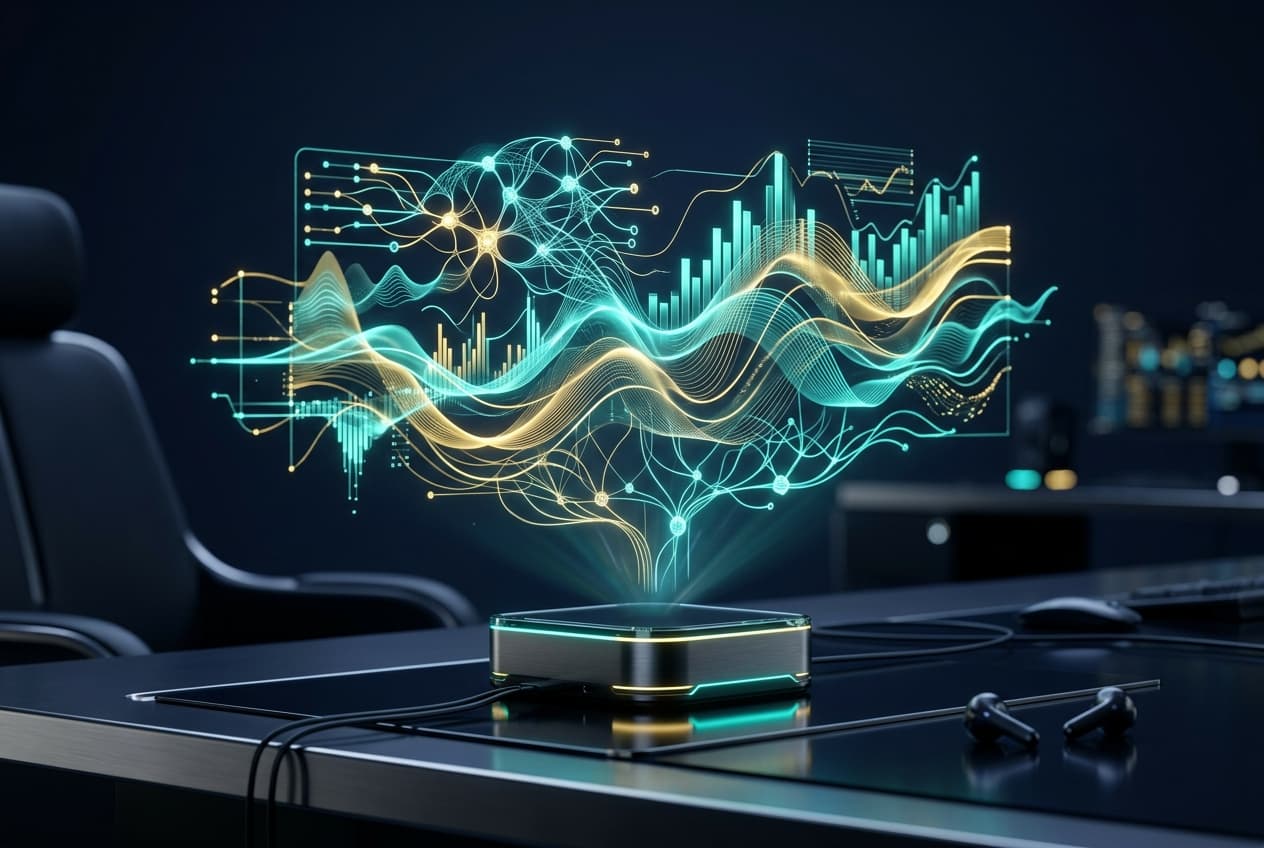
AI's ability to process and interpret human language opens new possibilities for trading analysis. Natural language processing (NLP) models can now analyze earnings call transcripts, news articles, social media posts, and regulatory filings to extract sentiment signals.
For retail traders, NLP integration could mean receiving alerts when the sentiment around a stock they are watching shifts dramatically. Imagine uploading a chart for pattern analysis and receiving not just the technical assessment but also a summary of recent news sentiment and social media discussion volume for that ticker.
The challenge is accuracy. Current NLP models can determine overall sentiment (positive, negative, neutral) with reasonable reliability, but they struggle with sarcasm, context-dependent meaning, and the specific jargon of financial markets. A headline like "Company X Crushes Earnings" is clearly positive. But "Company X reports strong revenue growth despite margin compression" requires more nuanced interpretation.
As NLP models improve, their integration with technical analysis tools will provide traders with a more complete picture. The combination of "this chart shows a bullish breakout pattern" with "news sentiment has turned positive over the past week" creates a more informed decision than either signal alone.
Predictive Analytics: From Detection to Probability
Current AI trading tools excel at detection: identifying what pattern exists on a chart right now. The next evolution is probabilistic prediction: estimating the likelihood of specific outcomes based on the detected pattern and its historical context.
This does not mean predicting the future. No AI model will ever tell you with certainty that a stock will go up tomorrow. But statistical models can analyze thousands of historical instances of a specific pattern and calculate the probability distribution of outcomes.
For example, a model might determine that ascending triangles that form above the 200-day moving average with increasing volume have historically broken out to the upside 72% of the time, with an average measured move of 8.3%. That probability and expected value information, derived from rigorous statistical analysis rather than guesswork, gives traders a quantitative framework for position sizing and risk-to-reward calculation.
The key is communicating these probabilities honestly. An AI tool that says "72% historical breakout rate for this pattern type in this context" is infinitely more useful and honest than one that says "BUY NOW, this pattern is going to moon."
Real-Time Analysis: Continuous Monitoring
Most current AI trading tools operate on a request-response basis: you upload a chart, and you receive analysis. The future moves toward continuous monitoring, where AI systems watch your chosen securities in real time and alert you when patterns form, breakouts occur, or conditions change.
This continuous monitoring model addresses one of the biggest challenges retail traders face: time. Most retail traders have jobs and cannot stare at charts all day. An AI system that monitors 50 stocks continuously and sends an alert when a high-confidence bull flag breakout occurs on above-average volume is enormously valuable for time-constrained traders.
The technical infrastructure for real-time analysis already exists. The challenge is computational cost. Running continuous pattern detection across multiple securities on multiple timeframes requires significant processing power. As computing costs continue to decline and models become more efficient, real-time AI monitoring will become affordable for individual retail traders.
Personalized AI: Learning from Individual Patterns
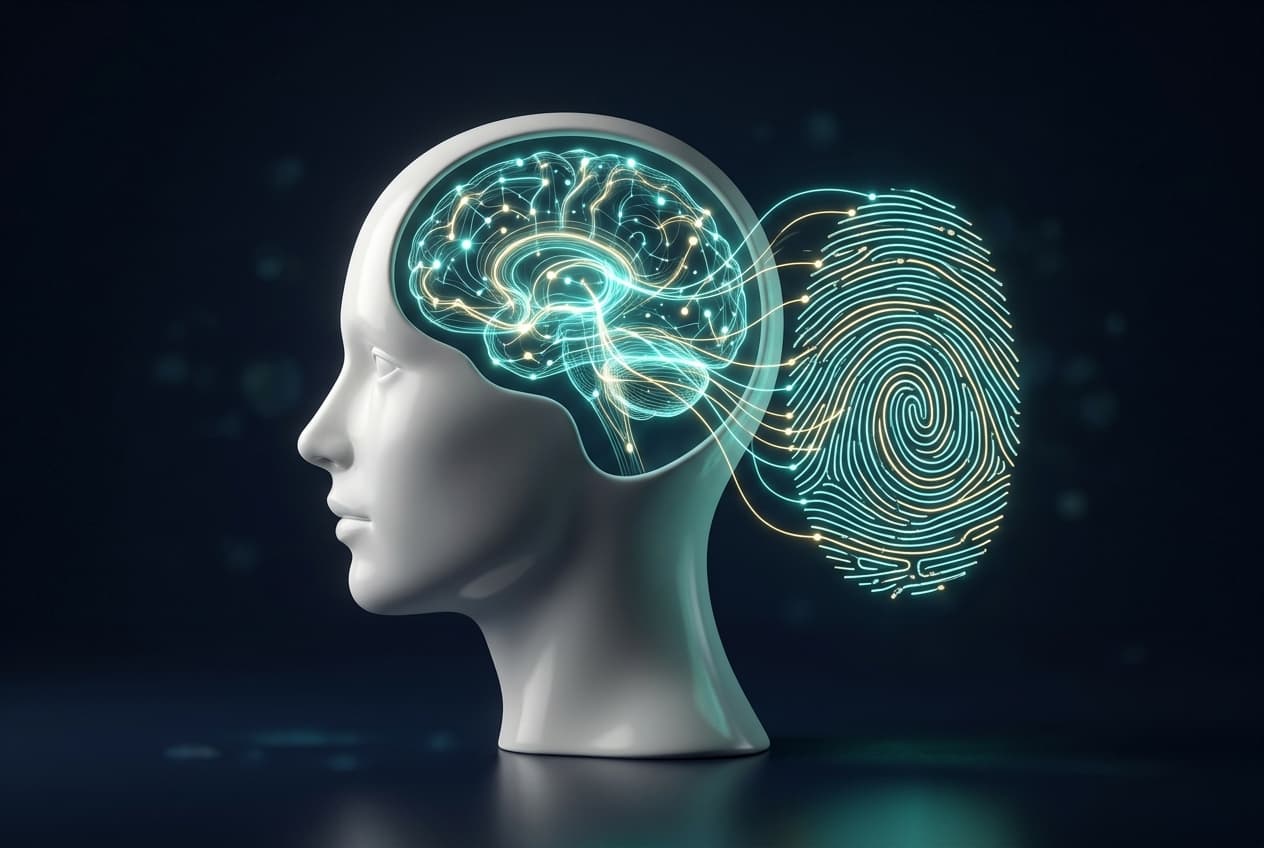
The most interesting long-term development is AI that learns from individual trader behavior. Current tools apply the same analysis framework regardless of who is using them. Future tools will adapt to individual trading styles, preferences, and performance data.
If the AI observes that a specific trader performs best on swing trades with double bottom patterns on the daily timeframe, it could prioritize those setups in its alerts and analysis. If the trader consistently loses money on scalp trades in choppy markets, the AI could flag those conditions as poor environments for that individual.
This personalization requires traders to maintain detailed trading journals that the AI can analyze. The combination of the trader's performance data with the AI's market analysis creates a feedback loop that improves both the tool's recommendations and the trader's self-awareness.
Regulatory Considerations
As AI trading tools become more powerful and widespread, regulatory attention will increase. Regulators face a genuine challenge: they want to protect retail traders from misleading tools and market manipulation while avoiding stifling innovation that could genuinely benefit individual investors.
Several regulatory questions remain unresolved. Should AI trading tools be classified as financial advisors? Should they require specific disclosures about their methodology and limitations? Should there be accuracy standards or testing requirements before a tool can market itself as "AI-powered"?
The most likely regulatory path involves enhanced disclosure requirements rather than outright restrictions. Expect AI trading tools to eventually face mandated disclosures about their training data, accuracy rates on standardized test sets, known limitations, and the distinction between analysis and advice. Serious tools already provide this information voluntarily; regulation would standardize it across the industry.
The Democratization Argument
Perhaps the most compelling case for AI-assisted trading is its potential to close the information and analysis gap between retail and institutional traders. For decades, institutional traders have had access to sophisticated quantitative analysis, real-time data feeds, and teams of analysts that individual traders could not match.
AI trading tools shift this balance. An individual trader with access to quality AI analysis can identify patterns, assess probabilities, and evaluate trade setups with a speed and consistency that was previously available only to well-funded institutions. The analysis is not identical to what a Goldman Sachs quant desk produces, but it is vastly closer than what retail traders had access to even five years ago.
This democratization has real implications for market efficiency. As more participants gain access to better analytical tools, mispricings may be identified and corrected faster. The collective quality of market analysis improves, which in theory leads to more efficient price discovery.
What Will NOT Change
Amid all this technological progress, some fundamentals of successful trading will remain unchanged regardless of how advanced AI becomes.
Risk management is permanent. No AI tool eliminates the need for stop-losses, position sizing, and portfolio-level risk control. Markets will always produce unexpected moves. The traders who survive are the ones who manage risk consistently, whether they use AI tools or hand-drawn charts.
Discipline cannot be automated. AI can identify the perfect setup and calculate optimal entry, stop, and target levels. But the trader still has to execute the plan. Entering late, moving stops, adding to losing positions, and revenge trading after losses are human behavioral problems that no AI tool can solve. The trader must develop the psychological discipline to follow their system.
Markets remain uncertain. AI improves the quality of analysis and the consistency of pattern recognition. It does not make markets predictable. Every trade carries risk. Every pattern can fail. Traders who understand this fundamental truth will use AI as a tool for better decision-making. Traders who expect AI to guarantee profits will be disappointed.
Learning never stops. The best traders are continuous learners. They study new patterns, refine their strategies, review their journal data, and adapt to changing market conditions. AI accelerates this learning process by providing objective feedback, but it does not eliminate the need for ongoing education and self-improvement.
PatternPilotAI's Vision
PatternPilotAI is building toward a future where every retail trader has access to institutional-quality chart analysis. The current platform provides AI-powered pattern recognition with confidence scoring, specific trade levels, and transparent methodology. The roadmap includes enhanced real-time analysis, deeper probabilistic assessments, and personalized insights based on individual trading performance.
The goal is not to replace trader judgment but to augment it. A trader who combines AI pattern analysis with their own market knowledge, risk management discipline, and trading experience becomes more effective than either human or AI analysis alone.
The technology will continue advancing. The fundamental principles of disciplined, risk-managed trading will remain the foundation. The traders who succeed will be the ones who use AI as a powerful tool within a structured trading process, not as a magic solution that eliminates the need for skill and discipline.
Experience AI-assisted chart analysis today. Sign up for free and see how pattern recognition technology can enhance your trading decisions while you maintain full control over your strategy and risk management.
Ready to analyze your charts?
Try PatternPilotAI free. Upload any chart and get an AI-powered trade plan in seconds.
Get Started Free